
Our black lab Mandy is 3.5 years old, weighs a ton, and her breath used to smell like death—until we started giving her one Greenies a day. My husband orders them from Amazon, and he also gets them for our neighbor's small dog, Bailey.
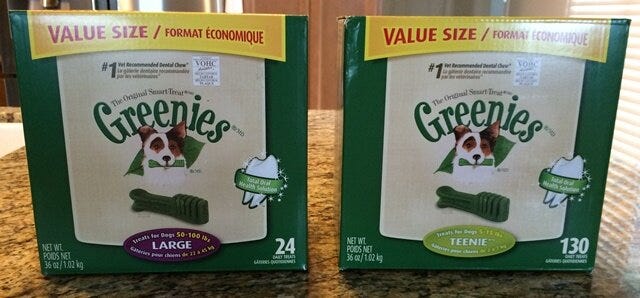
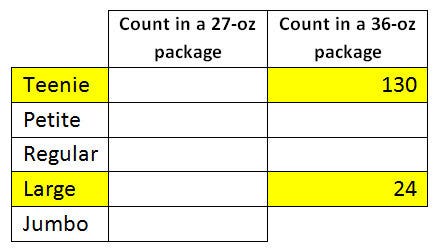
Although both boxes weigh the same 36 ounces, Bailey gets 130 treats in the Teenie size while Mandy gets only 24 in the Large size. This caught my attention, which led to a task for my 8th graders, who just so happened to be learning about similar shapes. (Like I had planned this all along.)
Greenies are sold in various package sizes, but I focused on the 27-oz and 36-oz ones.
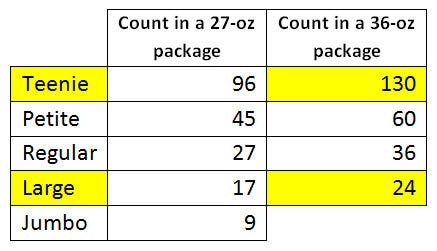
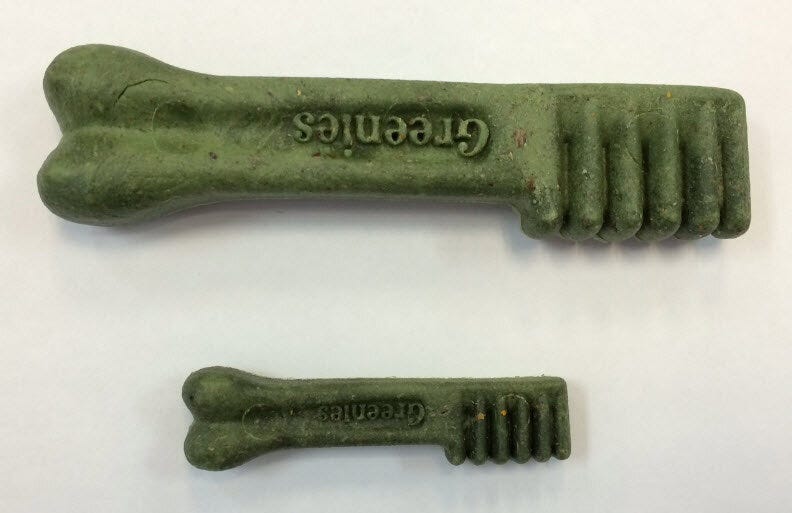
To launch the task, I held up the two treats: one Large and one Teenie. I told them there are 24 Large treats in a 36-oz package, and I asked them to guess how many Teenie treats would be in the same-sized package.
Then I gave each group:
A photo of the two packages (only with the highlighted information from the table).
Two real treats: one Large and one Teenie.
In return, they needed to give me:
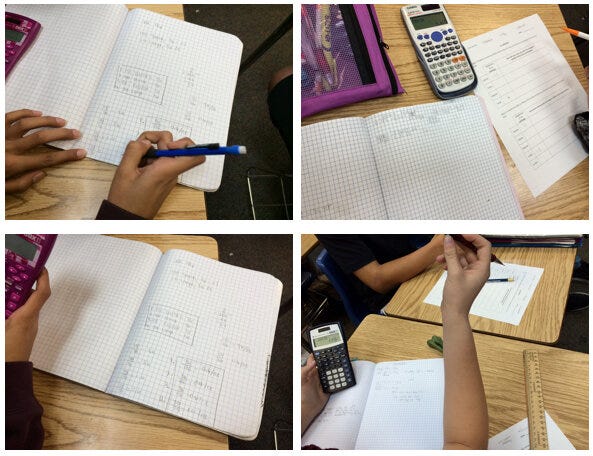
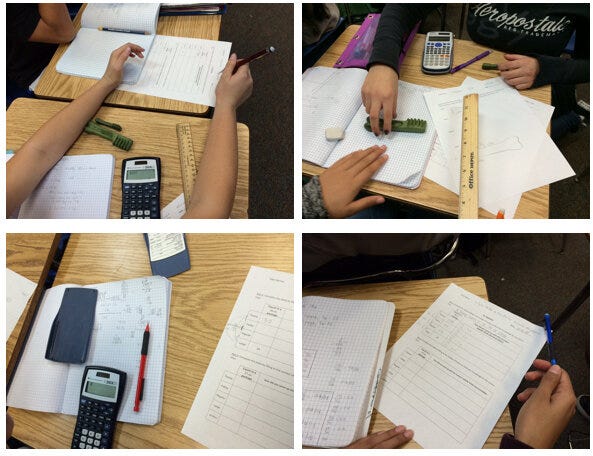
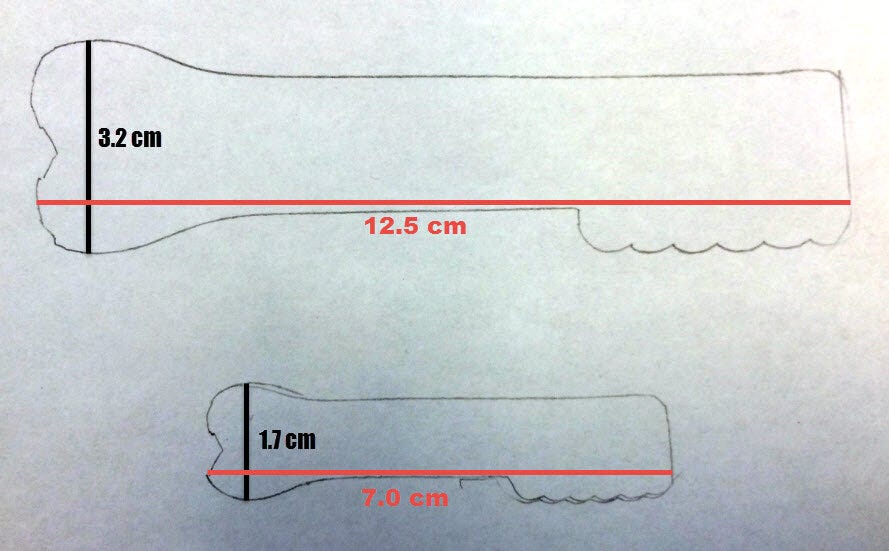
A 2-dimensional outline—with labeled dimensions—of what a Petite, Regular, and Jumbo treat might look like. (For reference, I showed them outlines of the actual Large and Teenie.)
A completed table with the missing counts filled in.
Highlights of the task:
Kids used known information to construct new information.
They modeled to estimate what the other sizes may look like and how many would fit in each package.
It was kinda messy and weird—in a good way. While they could measure treat lengths and widths, how do these numbers translate into mass?
It was a great shift from working with flat polygons to actual 3D objects in the context of similar shapes.
The big reveal (Act 3) was always fun—not just in seeing the actual counts per package, but comparing how close their sketches were when I brought in the real Petite, Regular, and Jumbo treats.
Some good questions came up:
How much does a 36-oz package cost?
Is Jumbo just a shot in the dark?
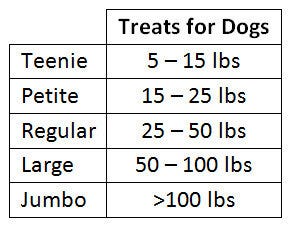
Would students think to ask me about the size of the dogs?
How does knowing a dog’s size help, if at all?
These are exactly the kinds of questions I want my students to wrestle with.