


My 8th graders are learning about rigid transformations, and I want to add a bit more complexity to what the book is asking them to do.
The book mostly sticks to reflections across the x-axis or y-axis, and occasionally throws in something like "the horizontal line that goes through y = 3." But we’ve just finished a chapter on writing and graphing linear equations, so I want kids to reflect shapes across any line—yes, even a line that cuts right through the shape.
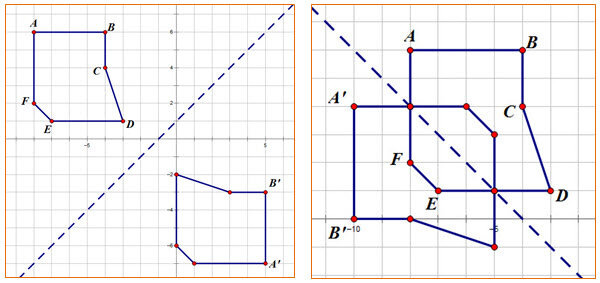
Also, the book has surprisingly few examples of rotations. And when they do show up, it’s always about the origin or a point that lands right on one of the shape’s vertices. I want my students to rotate a shape about any point, even one inside the shape. I used a playing card—number 7 is great because it’s asymmetrical—stuck a pencil through it as the center of rotation, and turned it. I think this helps them see what I keep calling the pivot or anchor point.
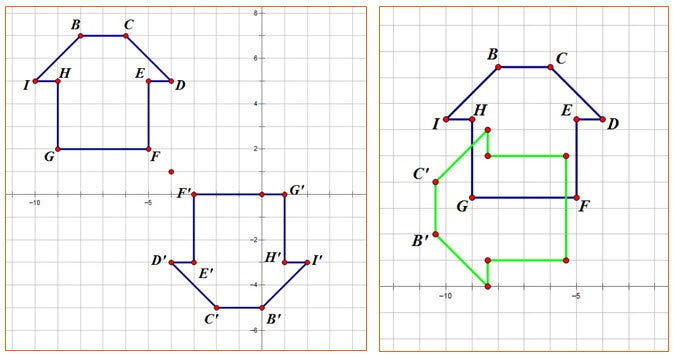
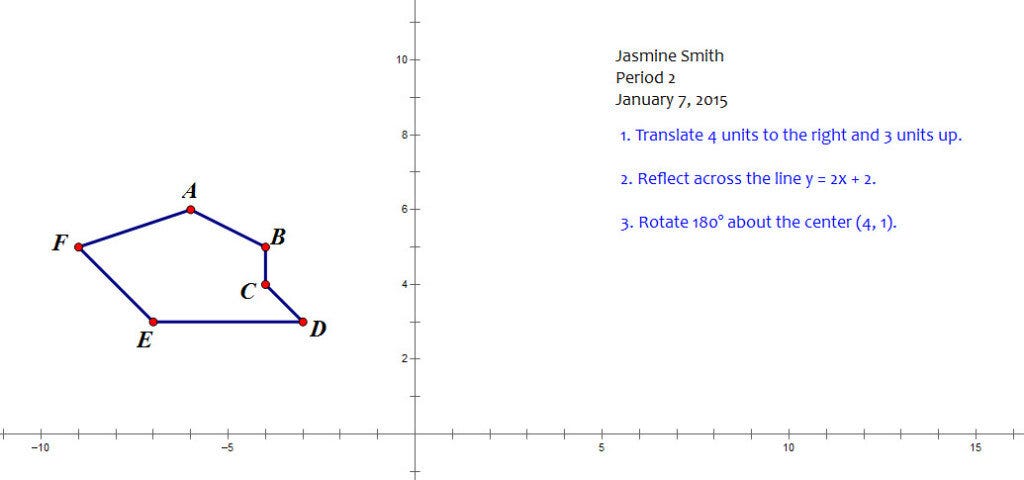
Here’s the task I gave them:
Draw a shape with 5 to 8 straight sides—no curves.
Transform your shape using at least 3 rigid transformations: rotation, translation, and reflection (in any order).
On grid paper, turn in a complete version that includes the original shape, all steps of the transformations, and written directions for each move.
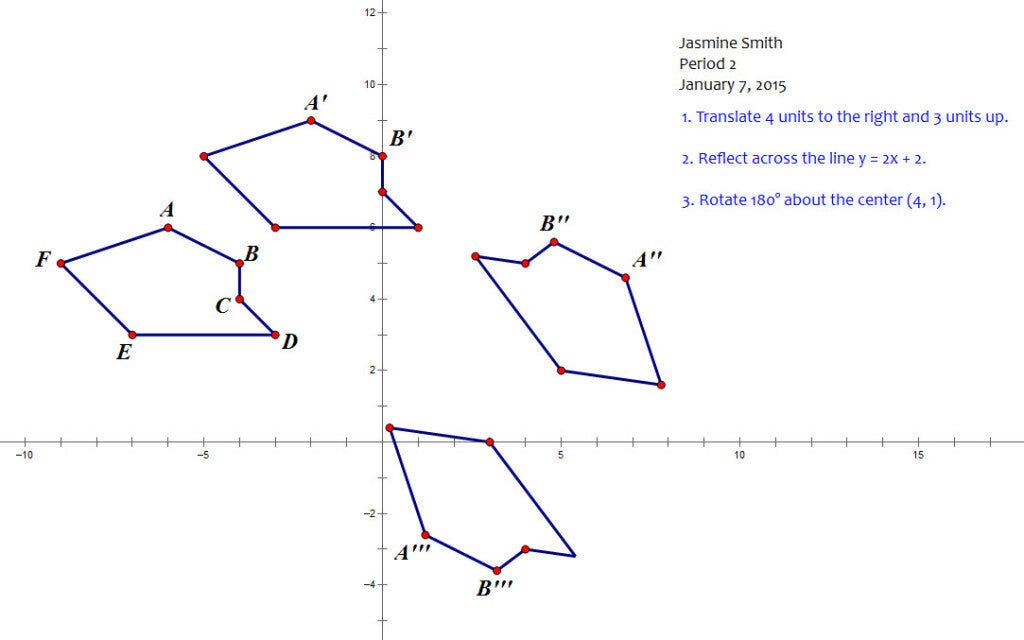
Then, on a separate grid paper, write only the instructions and draw just the original shape. This copy gets handed to a random classmate, who will attempt to follow the directions and land on your final image.
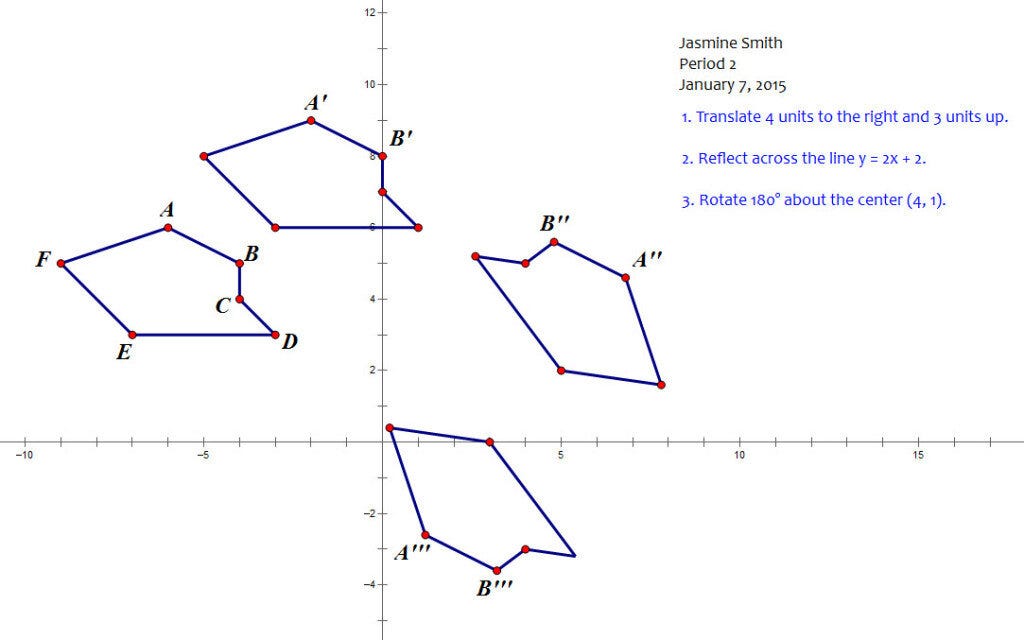
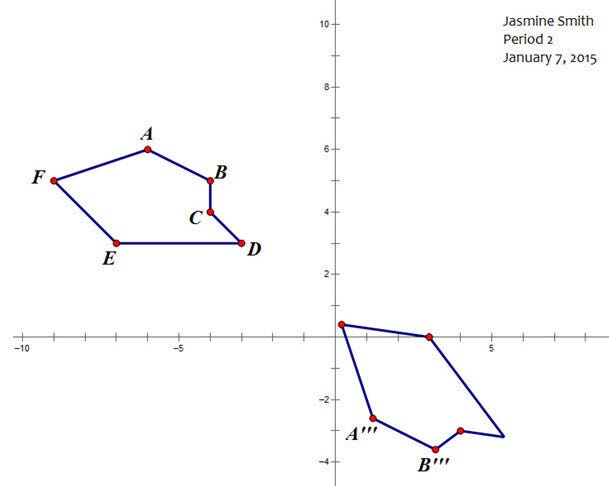
For students who want more challenge: I give them a copy with just the original and final image—no directions. Their job is to figure out the transformations that connect the two.
I really believe it’s good practice to give kids more than what we think they can handle. Let them tell us when it’s too much—we find out soon enough. An ounce of struggle on something hard is worth a pound of completion on something easy.