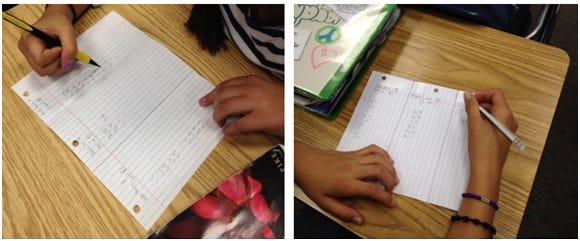

Yesterday, my colleague pointed out that we were almost two chapters behind on our 6th-grade pacing calendar. I’m always behind on this annoying and demanding calendar—but not usually this far back. So, just like that, I told the kids: we’re done with Chapter 8. Let’s move on to Chapter 9—Probability!
And what’s the best way to start a new unit?
We play a game, of course.
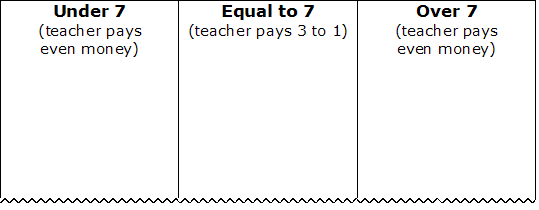
I asked the kids to take out a blank sheet of notebook paper, turn it landscape, divide it into thirds, and label each section like this:
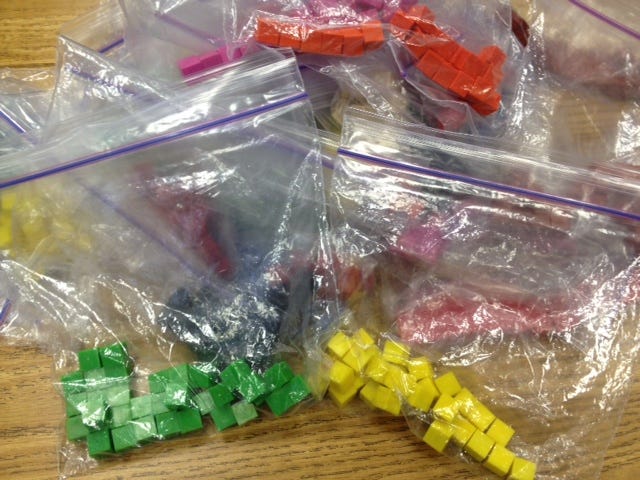
I gave each student a bag of centimeter cubes (we use these for everything). They took out just five cubes—this was their money. The rest of the cubes in the bag represented the dealer’s money. I am the dealer.
I reminded them: be honest. Cheating sucks. No borrowing. If you lose your five cubes, you sit out.
How the game works:
I roll two dice. If the sum is under or over 7, I pay even money. If the sum is exactly 7, I pay 3 to 1.
I modeled a few rounds so they’d get it. They reach into the bag to take money if they win or return cubes if they lose—betting only on the outcome they pick. If they bet wrong, they lose.
Before each roll, I looked across the room to make sure their bets were down. These are 6th graders—adorable, but I wouldn’t put it past them to fib about where they put their bets.
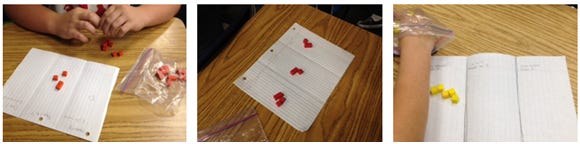
First roll: 2 and 5—sum is 7. Kids cheered.
Second roll: under 7—they roared.
Third roll: over 7—they went nuts.
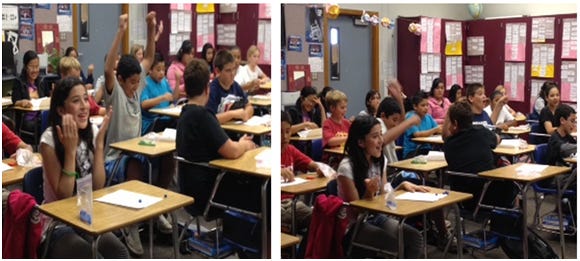
They were having a blast.
I paused to remind them to think about the math.
“What math?” they asked. And that’s okay for now.
The kids who were winning started betting more cubes. Leo placed one cube in each section.
Arthur told him, “I don’t think that’s a good idea.”
Melanie was betting on all three anyway—”Better chance of winning,” she said.
The math will show up. For now, let’s have fun.